
To get the most sales growth from your customers, it pays to know who to target. That strategy will help produce the strongest return on investment.
Here’s a deceptively simple question: what’s the goal of your incentive program? There’s the obvious answer — some level of return on investment. But how you achieve that success is going to vary depending on who you’re targeting.
Let’s talk about the most basic guiding principle of incentive program design: how to target your different customer bases.
Not all your customers will respond to an incentive program in the same way. Understanding who to motivate is key to a successful incentive strategy.
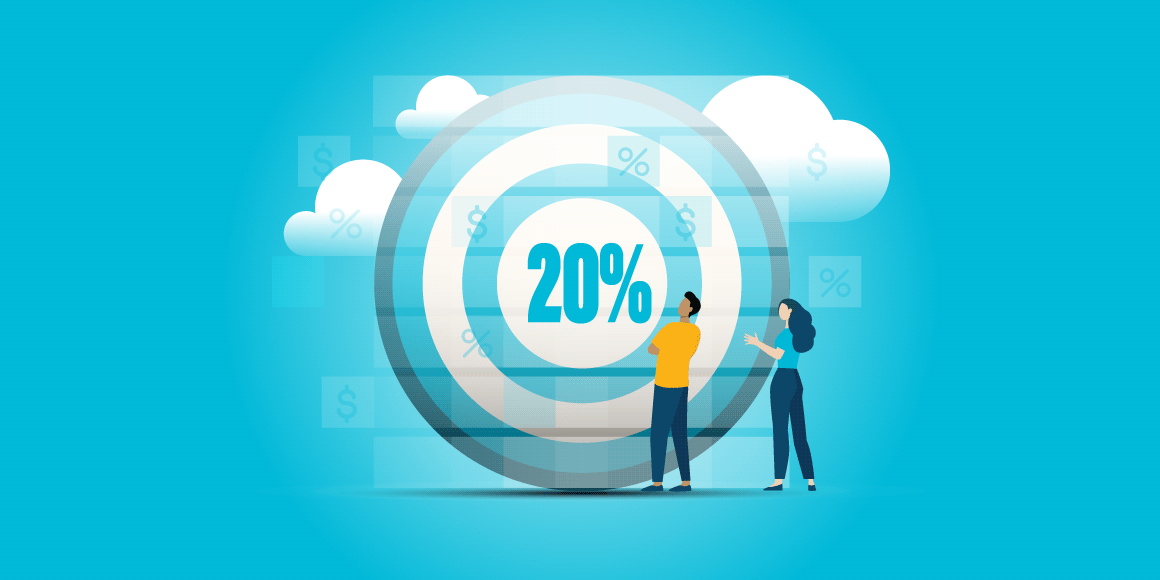
What Is the Next 20% Customer Strategy?
The “Next 20%” customer strategy is a revenue growth approach focused on identifying high-potential customers within a company’s middle customer segment. Instead of relying only on top-performing accounts or new customer acquisition, businesses use customer data, segmentation, incentive programs, and personalized engagement strategies to grow revenue from existing customers with untapped buying potential.
For many manufacturers and channel-driven organizations, the middle 60% of customers represents the largest opportunity for sales growth. By improving customer engagement, increasing purchase frequency, and strengthening loyalty through targeted incentives and marketing, companies can unlock scalable revenue growth without significantly increasing acquisition costs.
This strategy combines:
- Customer segmentation
- Sales data analysis
- Incentive and loyalty programs
- Personalized marketing
- Customer retention strategies
When executed effectively, the Next 20% strategy helps businesses increase customer lifetime value, improve retention, and drive sustainable sales growth across their channel ecosystem.
Why Your Top Customers Are Not Your Biggest Growth Opportunity
In the economics theory known as the Pareto Principle, the top 20% of performers contribute 80% of the revenue. This could be in profit, peas — you name it. In contrast, the other 80% of those performers only produce 20% of results. This disparity is staggering and can sometimes be closer to 15/85 or even 10/90.
With such a deep disparity between these two groups, you’ll need different strategies. Imagine trying to pursue an aggressive sales growth strategy with customers who already make up most of your revenue. Attempts like these can make top customers feel like they’re getting squeezed for every penny they have.
Not exactly the best way to communicate your gratitude for all the business they do with you. Onboarding new customers is almost always less profitable than continuing business with old ones. That makes customer retention deeply important.
How Incentive Programs Improve Customer Retention
So, instead of targeting this group with further account penetration, consider something like a president’s club or other loyalty program to thank them for their years of partnership.
But when it comes to sales growth, let’s consider a different group: your Next 20%.
Why Mid-Tier Customers Drive the Biggest Revenue Growth
The reality for many businesses is that their customer behavior lays out much like a bell curve. The top 20% makes up of the best customers. The middle 60% makes up a wide variety of purchasers. Your bottom 20% makes up those one-time buyers.
Your Next 20% makes up that top 20% chunk of your middle 60%. Let’s look at it another way.
How to Identify High-Growth Customers in the Middle 60%
The middle 60% has a large potential for account penetration and sales growth. These customers are the ones that, with clever engagement tactics and marketing, will begin to spend more with you.
This group has potential because of the sheer size of the middle 60%. A 5% performance bump from this group can yield 70% more revenue than a similar gain from the top 20%.
Now, it’s safe to say that you won’t convert everyone in your middle 60% into top-level customers. However, creating a penetration strategy that actively targets your small-to-mid-sized customers can help create that high-performing Next 20%.
Customer Segmentation Strategies That Increase Sales Growth
Marketing Strategies That Increase Customer Engagement
There are two main strategies to consider for creating your Next 20%: a marketing strategy and a motivation strategy. Often times, the simple act of engaging with your audience via marketing can be enough to see a boost in sales. Increased awareness and visibility of products is never a bad thing.
While you most likely already have steady in-person conversations with your top customers using your account executives, you may not have the resources or personnel to maintain that kind of relationship with potentially double (and potentially more) the number of customers.
How to Use Sales Data to Target High-Potential Customers
Instead, take a look at your sales data. With enough time and research, you can start to pinpoint target accounts that have the greatest potential of growing their purchases with you. Then, focus your efforts on some well-placed and well-personalized print, digital, or automated marketing, and you have yourself the makings of a serious middle 60% campaign.
How Personalized Marketing Improves Customer Awareness
These tactics will make this audience much more aware of promotions, product launches, and any other deals you have available. The best small-to-mid-sized customer strategies don’t stop there; often they will include some sort of motivation factor that’s built in as well.
Why Incentive Programs Increase Customer Loyalty
Other than just a product and service, what kind of added value do you provide your customers with? What differentiating factor plays into the decision-making process for your buyers? Whether it’s an incentive like merchandise or cash, or being their go-to source for all things in your industry, make sure your buying experience makes all the difference for you in your Next 20%.
Together, these two strategies can have a strong and lasting impact when it comes to generating revenue from those small-to-mid-sized customers and can help you get you that much needed “unfair share” of your buyers’ wallets.
How to Unlock Revenue Growth Without Acquiring More Customers
Leveraging your data is paramount in enhancing customer engagement and driving sales growth. By strategically focusing on the middle 60% of your customers, you can cultivate a high performing 'Next 20%' group that holds immense potential for boosting your revenue. Utilizing data-driven strategies allows businesses to fine-tune their incentive programs for optimal results.
This approach not only helps in smashing the traditional Pareto Principle curve but also ensures sustained growth and customer loyalty. To dive deeper into optimizing your incentive strategies, explore our comprehensive resources or reach out to us for expert guidance on implementing effective solutions tailored to your business needs.
Frequently Asked Questions